Barbados has 13,468 hectares of grassland on a 85% food-import-dependent island.1
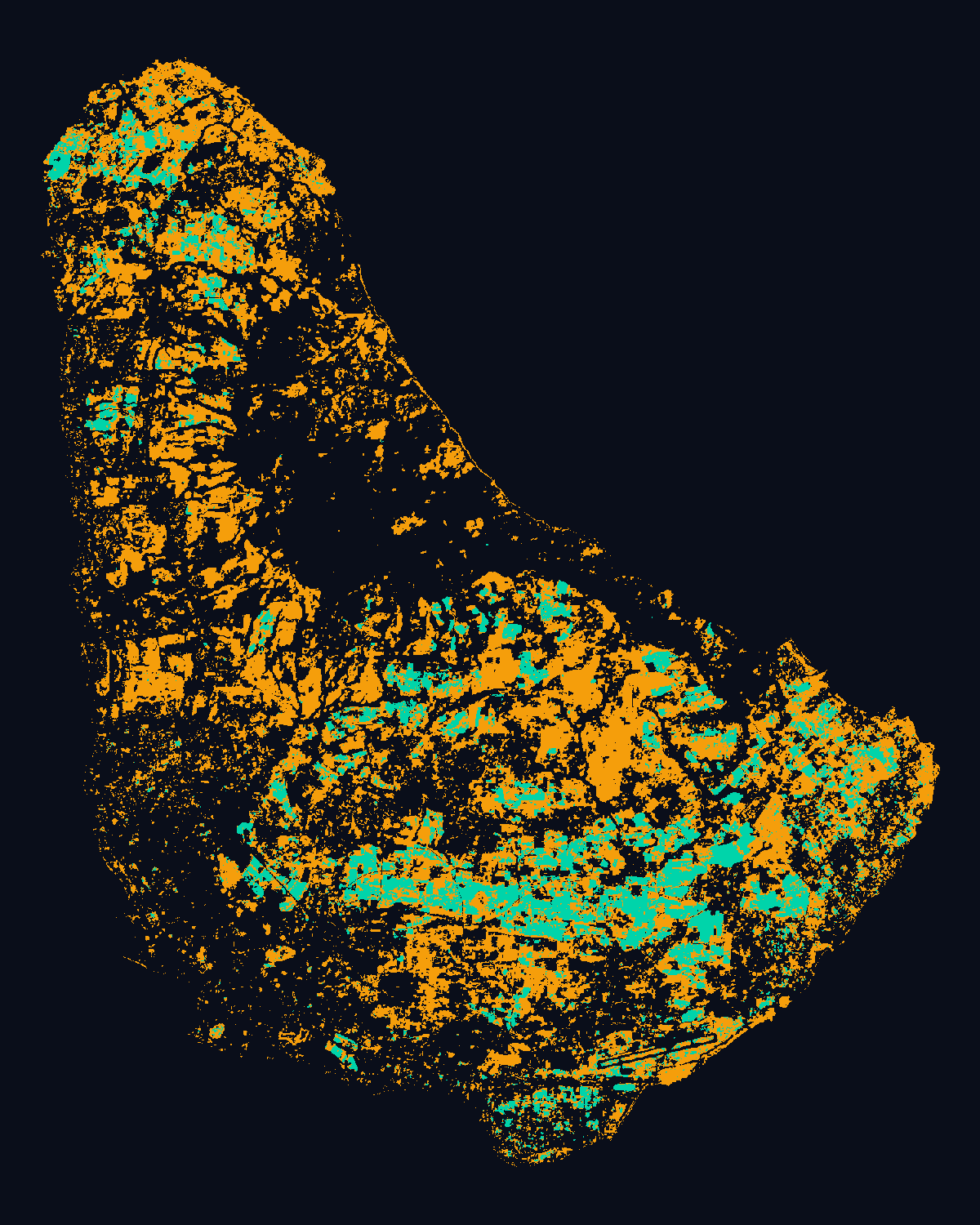
The first complete satellite land census of Barbados — every 10-metre pixel classified — reveals that grassland — much of it former sugarcane plantation — now covers 3.8× more land than active cropland. This represents the largest untapped agricultural resource in the Eastern Caribbean.
Barbados: The Sugar Island Transformed
Barbados was the first Caribbean island to produce sugar, beginning in the 1640s when Dutch merchants from Brazil introduced cane cultivation and enslaved African labour. By 1660, sugar had transformed the island into one of the wealthiest colonies in the British Empire — and created the world's most extreme monoculture economy. At its peak, 80% of the island's land was dedicated to sugarcane, a ratio unmatched anywhere in the Caribbean. For over three centuries, the plantation system defined Barbados's landscape, economy, and society.
The decline was slow, then sudden. By the 1970s, preferential pricing under the Sugar Protocol was eroding. The Carrington Commission (1992) formally recommended diversification away from sugar, but implementation was piecemeal. When the EU ended the Sugar Protocol in 2003 and reformed quotas, the industry effectively collapsed. Estate after estate went fallow. The Barbados Agricultural Development and Marketing Corporation (BADMC) controls over 3,000 hectares of former plantation land — but without operators, much of it became the idle grassland now visible from space.
Today, Barbados has not conducted a comprehensive agricultural census since 1989 — 37 years ago. The satellite data in this dossier represents the first complete picture of land use since that era. CaribVista is, in effect, the first agricultural census Barbados has had in a generation. Meanwhile, the island is classified as water-stressed at just 1,100 m³ of renewable freshwater per person per year — well below the UN threshold of 1,700 m³. Every agricultural decision must account for this constraint.
Yet Barbados retains assets few Caribbean nations possess: Bridgetown's UNESCO World Heritage inscription (2011) draws 700,000 tourists annually, creating year-round demand for locally grown food. Barbados became a republic in 2021, signalling a new era of self-determination. The BADMC land window represents the largest available agricultural land in decades. Satellite intelligence now makes it possible to match crops to soil, water, and market conditions at 10-metre resolution — precision that the sugar planters of 1640 could never have imagined.
Settlement in 1627, sugar revolution in the 1640s, emancipation in 1834, independence in 1966 — Barbados has reinvented itself before. This is the next transformation: from sugar monoculture to diversified, satellite-guided, climate-resilient agriculture.
Land Cover by Parish
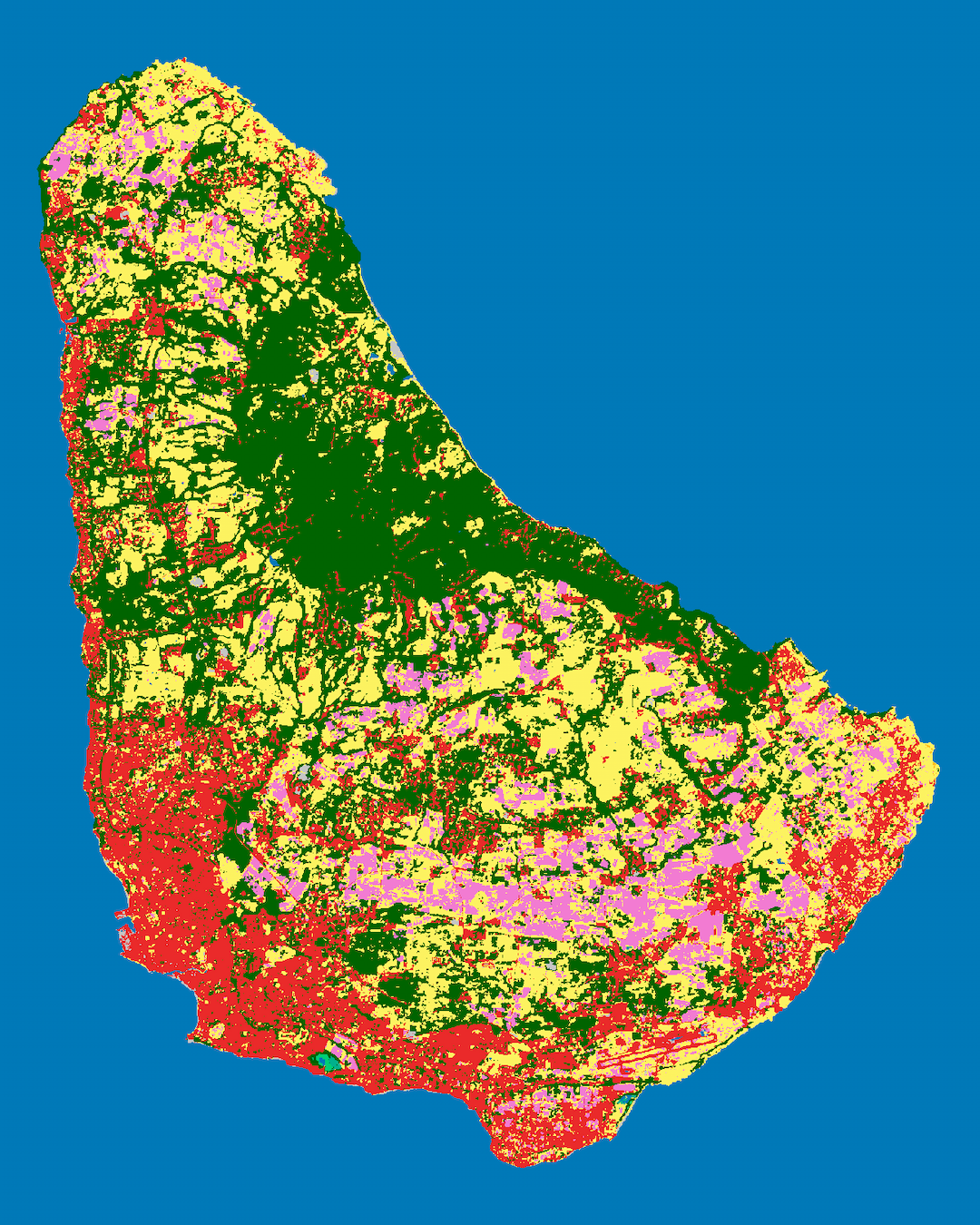
ESA WorldCover v200 pixel counts at native 10m resolution, clipped to FAO/GAUL parish boundaries. Every bar segment is a real hectare count.
What Our Platform Sees
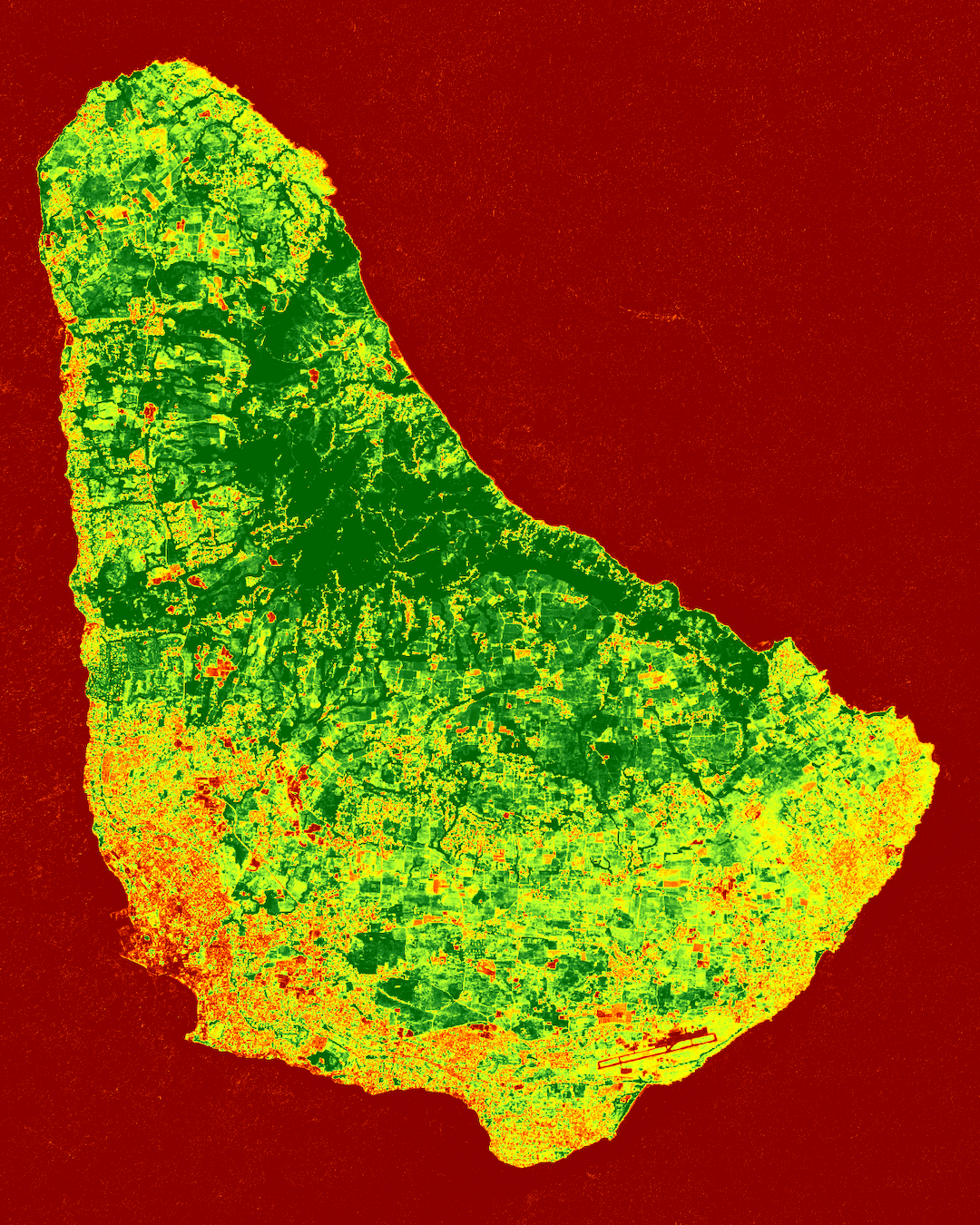
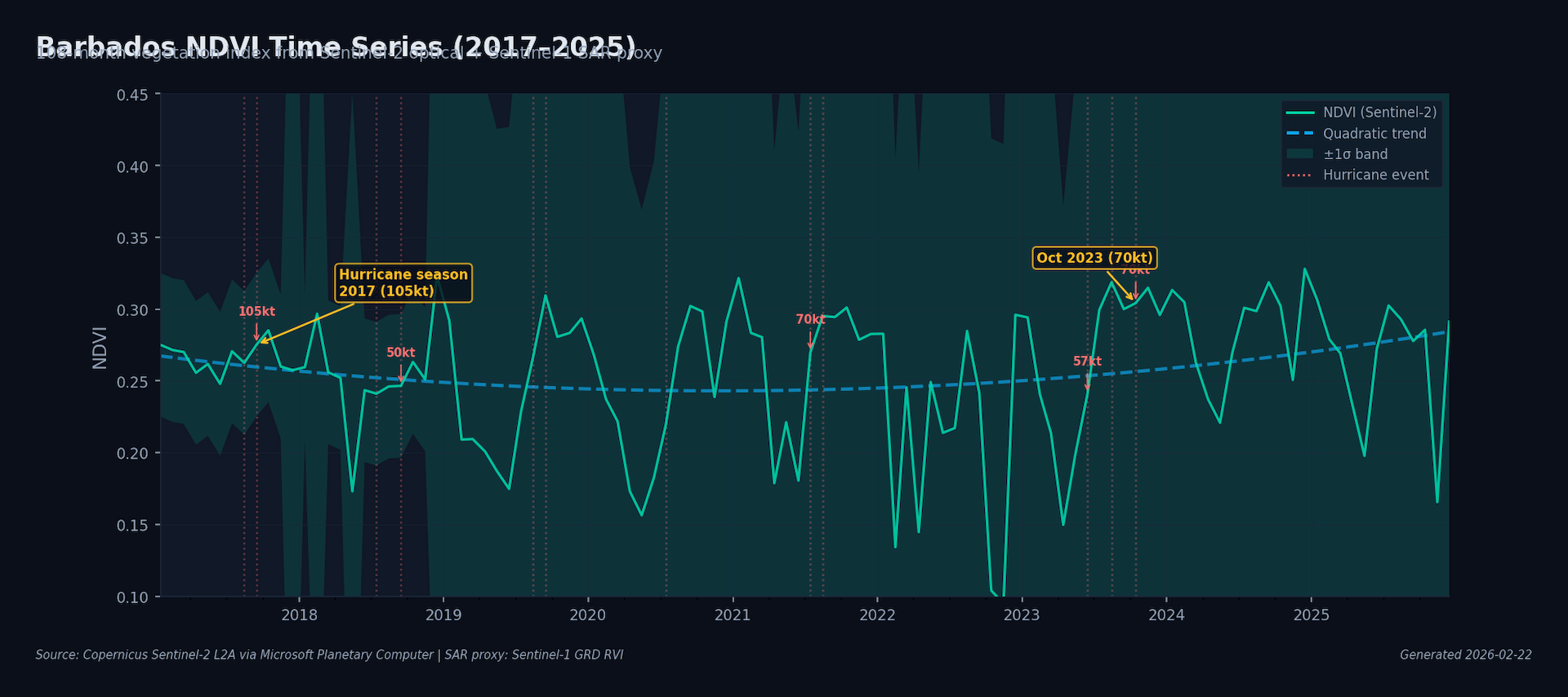
Cloud-free classified maps from ESA WorldCover v200 and Sentinel-2. Every pixel is a real 10m×10m classification — no raw photos, no cloud cover.
The Ask
$800K TA grant + $700K concessional loan.
Year 1: 200 ha pilot, 50 farmers, first crop cycle.